Why AI is the Future of Call-Center Quality Control
Why call centers adopt AI for quality control: efficiency, consistent scoring, full call coverage, and faster coaching than manual review.
InsightsUpdated 2 min read

Key takeaways
- AI automates call review, cutting the time and resources quality control needs.
- Every call is evaluated the same way, so scoring is consistent and objective.
- Sentiment analysis and routing improve the customer experience.
- Automation lowers labor costs and surfaces data-driven insights.
Call centers are an essential part of customer service for many businesses. They are the first point of contact for customers with questions, concerns, or issues. Ensuring that customers receive high-quality service is critical to maintaining customer satisfaction and loyalty. This is where call center quality control comes in. In recent years, call centers have started adopting AI technology to improve their quality control processes. In this blog post, we'll explore why AI is the future of call-center quality control.
Increased Efficiency
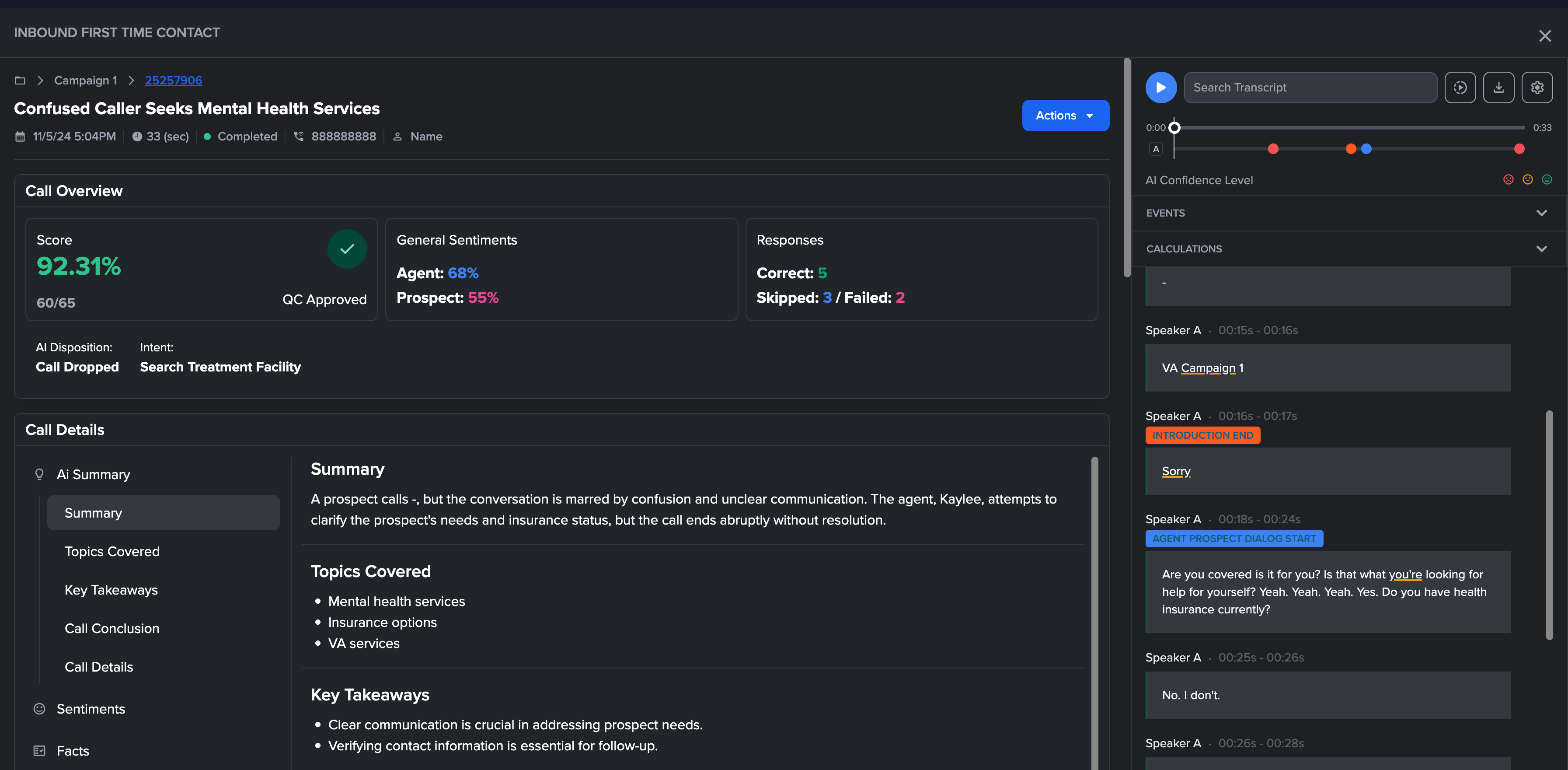
One of the most significant benefits of AI for call-center quality control is increased efficiency. With traditional quality control processes, human agents are responsible for listening to recorded calls, identifying areas for improvement, and providing feedback to agents. This process can be time-consuming and resource-intensive. AI technology, on the other hand, can automate many of these tasks, reducing the time and resources needed for quality control. For example, speech analytics can automatically transcribe and analyze phone conversations, flagging areas for improvement and identifying potential compliance issues.
Improved Accuracy
Another advantage of AI for call-center quality control is improved accuracy. Humans are prone to errors, and it can be challenging to ensure consistency across all quality control evaluations. AI technology, on the other hand, can provide consistent and objective evaluations of agent performance. By automating quality control processes, businesses can ensure that every call is evaluated in the same way, reducing the potential for errors and improving the accuracy of evaluations.
Enhanced Customer Experience
AI can also enhance the customer experience by providing more personalized and efficient service. For example, natural language processing can be used to identify customer needs and route calls to the most appropriate agent. Sentiment analysis can be used to identify unhappy customers and provide them with targeted solutions to address their concerns. By leveraging AI technology, call centers can provide faster, more personalized service, leading to higher customer satisfaction and loyalty.
Data-Driven Insights
Another significant benefit of AI for call-center quality control is the ability to generate data-driven insights. With traditional quality control processes, it can be challenging to identify trends or patterns in agent performance. AI technology, on the other hand, can analyze large volumes of data to identify trends and provide insights into areas for improvement. Predictive analytics, for example, can be used to identify patterns in customer behavior and anticipate their needs, allowing businesses to proactively address potential issues.
Cost Savings
Finally, AI technology can also result in cost savings for call centers. By automating many quality control processes, businesses can reduce the need for human agents, leading to lower labor costs. Additionally, AI technology can improve the efficiency of call routing and staffing, ensuring that the right agents are available to handle customer inquiries, further reducing costs.
In conclusion, AI technology is the future of call-center quality control. By leveraging AI tools like speech analytics, natural language processing, and predictive analytics, call centers can improve efficiency, accuracy, and customer experience while generating data-driven insights and reducing costs. As AI technology continues to evolve and become more sophisticated, call centers that adopt these tools will be better positioned to deliver excellent customer service, improve business outcomes, and stay ahead of the competition.
Frequently asked questions
Get the insider's news

More from OnScript News
Product Updates
OnScript API Is Coming: Voice Intelligence for Your Stack
The OnScript API is coming: speech-to-text, call scoring, tonality, sentiment, and conversation analysis as APIs. Join the early access waitlist.

Product Updates
Darby Is Now in Slack and Microsoft Teams
Ask Darby questions directly in Slack or Microsoft Teams and get answers from your OnScript data without switching tools or opening another app.
Product Updates
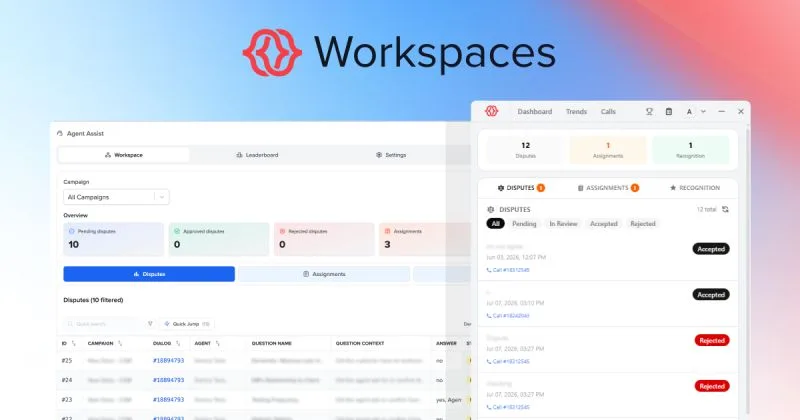
Introducing Workspaces: Disputes, Coaching Assignments, and Recognition in One Hub
Workspaces in OnScript AI bring scorecard disputes, coaching assignments, and recognition into one hub for managers and agents, on web and desktop.